 Back to News
Why Building Compliance Plans Go Off Track and How to Correct Them Early
By Michael Scorrano, PE | Founder & Managing Director, EN-POWER GROUP
Why Building Owners Reassess Compliance After Each Local Law Cycle
Right now, you’re probably reflecting on what did and didn’t work for your building during the most recent local law compliance cycle, whether that was NYC’s Local Law 97 (LL97), Local Law 88 (LL88), or another city-wide regulation.
That reflection is a good thing. It means you’re asking the right questions at exactly the right time: before the next building compliance deadline arrives.
By adjusting how you approach building compliance planning now, you give yourself more options later. Those options often translate into lower costs, fewer last-minute scrambles, and less double work for building operators and managers.
What Causes Confusion in Building Compliance Requirements
A lot of the confusion around compliance stems from just not being sure who is required to comply and how specific regulations apply to individual buildings. That uncertainty has been compounded by mixed signals and shifting timelines from the Department of Buildings (DOB). Historically, when deadlines moved, many owners and operators assumed, or hoped, that compliance might not be required after all.
In reality, the requirements never disappeared. But this perfect storm of evolving guidance, delayed enforcement, and fragmented communication made it difficult for even experienced building owners and managers to determine whether a regulation applied to their building, let alone what action was actually required.
How Buildings Determine Whether Compliance Requirements Apply
The questions were consistent:
- Do we need to be compliant?
- When do we need to comply?
- What does compliance look like for this building?
- Are we using the right building data to determine applicability and potential solutions?
Mistakes tend to happen when those questions are answered using assumptions instead of validated information. That’s where applicability becomes the critical issue, understanding how a law or regulation truly applies to a specific building, portfolio, or use case.
How Early Compliance Assumptions Affect Long-Term Planning Decisions
This is also where sophisticated buildings get tripped up. Not because they lack expertise or resources, but because early assumptions then shape every decision that follows. By the time those assumptions are challenged, flexibility has often already been lost.
Common Building Compliance Planning Mistakes We See in Practice
A common scenario looks like this: a building owner hears about a requirement and runs a quick calculation using a public tool or historical benchmarking data. Depending on the assumptions built into that tool, the result may look manageable or alarming. Either way, a conclusion is reached quickly, often without validating whether the inputs accurately reflect the building’s current conditions. As in all cases, you can’t trust all the data you find online.
Another scenario is delay. Some buildings postpone engaging compliance specialists because they assume the requirement won’t apply during the current cycle. When that assumption proves wrong, they’re forced to overcorrect, planning major capital projects before confirming baseline data, or locking themselves into expensive paths because they believe there’s only one viable option left.
Applicability decisions are frequently based on partial information, outdated area calculations, incorrect use classifications, or benchmarking data that was never intended to drive long-term capital planning. When those inputs are wrong, every downstream decision inherits that error.
What Happens When Compliance Applicability Is Misunderstood
Misunderstanding applicability rarely causes immediate failure. It shows up later, when planning windows start closing, options disappear, and fines begin to accumulate.
We’ve worked with buildings that assumed full electrification was the only way to comply, only to discover, after significant design work, that smaller, more targeted measures would have achieved the same outcome at a fraction of the cost.
We’ve seen portfolios delay action because they believed filing wouldn’t be required yet, then scramble late in the year and accept solutions they wouldn’t have chosen with more time. We’ve also seen buildings plan for the wrong compliance scenario entirely, budgeting for projects that didn’t meaningfully address the requirements that mattered most.
Why Early Compliance Applicability Analysis Preserves Cost and Planning Flexibility
Early, accurate applicability analysis gives building owners options. It creates time to evaluate cost-effective measures, strengthens capital planning discussions, and allows projects to be sequenced strategically instead of reactively.
Late clarity does the complete opposite. It compresses decision-making, increases pressure, and often results in higher costs for the same outcome. When misunderstandings surface late, the real consequence isn’t just noncompliance, it’s the loss of better, more flexible choices.
Why Treating Building Compliance as a Checklist Leads to Costly Outcomes
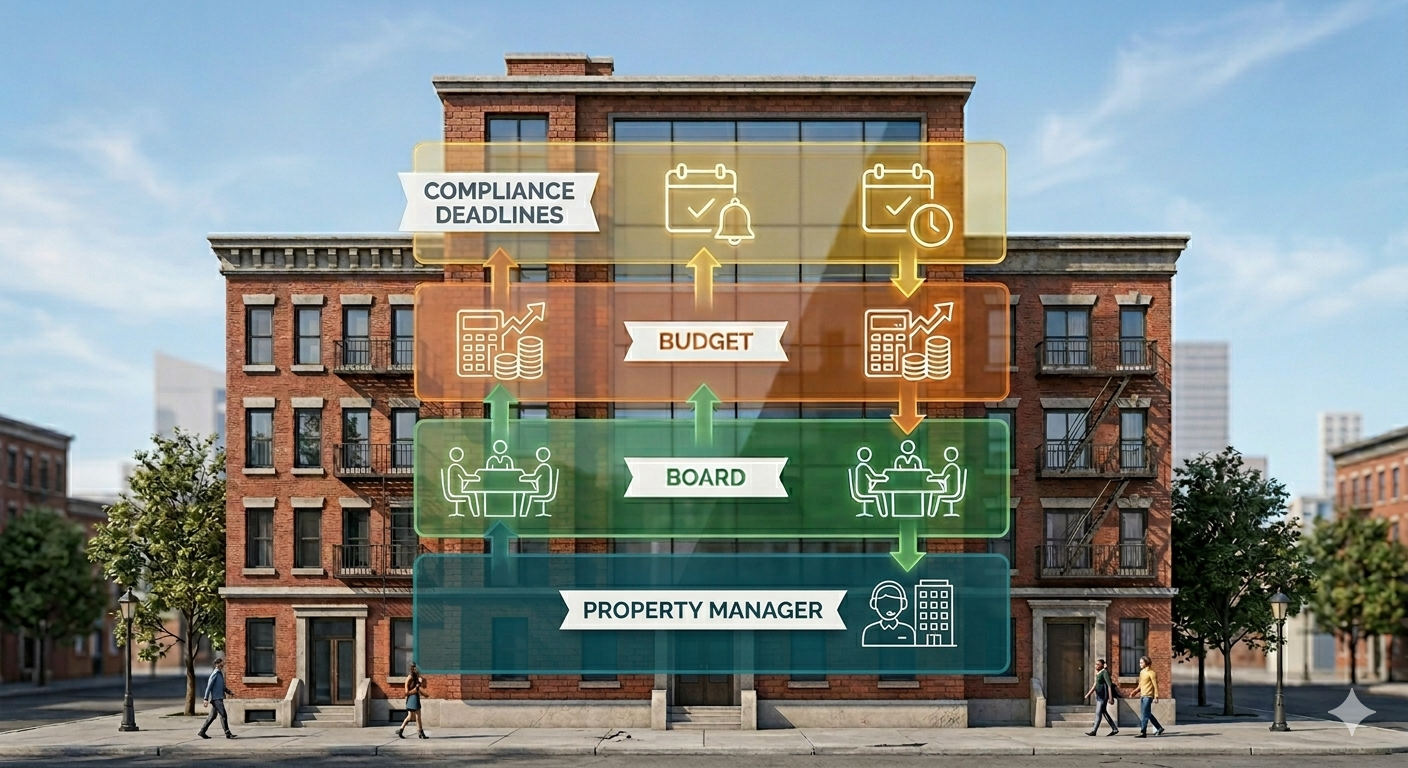
Another common mistake we see is treating each compliance obligation in isolation, addressing one requirement now and planning to “deal with the next one later.” The kick-the-can approach, if you will. In practice, these regulations are interconnected. Applicability decisions made today directly affect future planning, budgeting, and operational strategy.
When compliance is approached as a checklist instead of a strategic exercise, buildings miss the opportunity to align regulatory requirements with broader asset and portfolio goals.
What an Effective Building Compliance Strategy Is Designed to Achieve
Every building is different, and every portfolio has constraints. The right path forward is rarely all-or-nothing, and it’s almost never obvious without looking at the full picture. After decades of working in this space, one lesson consistently holds true: the earlier misinformation is corrected, the more, and often cheaper, options remain available.
Applicability isn’t about memorizing regulations or predicting future policy shifts. It’s about working with professionals who understand how these rules are applied in practice, validating assumptions with accurate data, and making decisions that preserve flexibility rather than eliminate it.
That clarity reduces complexity. It prevents confusion from compounding into costly mistakes. And ultimately, that’s what an effective building compliance strategy is meant to do.
Compliance decisions made early shape cost, flexibility, and long-term outcomes.
If you want to pressure-test your current approach, our Director of Business Development can help you evaluate applicability and next steps before options narrow.
→ Speak with Mitchell Karasik, Director of Business Development